

Events & Activities
Total 34건
-
 [2026.05.15_DCPP 76th Development Policy Seminar]
DCPP students attended a special lecture by Dr.Amgad Elmadhi on climate finance and sustainable urban transformation, gaining insights into how Green Climate Fund (GCF) supports low-carbon and climate-resilient development. The lecture explored the growing importance of cities in global climate action and discussed key barriers to urban transformation, including financing gaps and challenges in private sector engagement. Pariticipants also learned about GCF's financing instruments and project processes designed to accelerate climate action and mobilize blended finance. Participants actively engaged in discussions on GCF project cycles, technical assistance, monitoring systems, and practical policy challenges faced by developing countries, making the seminar a valuable opportunity to deepen understanding of sustainable development cooperation.
2026-05-19
Read More -
[2026.05.08_DCPP 2026 Spring KOICA Monitoring]
The 18th cohort participated in the 2026 Spring KOICA Monitoring session at SNU GSIS, providing an opportunity to reflect on their academic journey, program experiences, and adaptation to life in Korea. The session included a trainee presentation by Benjamin Odai Tetteh, who shared his experiences studying in Korea, engaging in academic activities, and exploring Korean culture through the DCPP program. KOICA and KOWORKS also conducted a monitoring meeting to review academic progress, student support systems, program satisfaction, and overall trainee well-being. Participants exchanged perspectives on seminars, workshops, field trips, and coursework while discussing challenges, cultural differences, and memorable experiences in Korea. The event also created a meaningful space for communication, cultural exchange, and future collaboration in development cooperation.
2026-05-12
Read More -
[2025.04.30-05.01] Spring Industrial Field Trip
The 18th cohort participated in a two-day industrial field trip to major energy and science institutions in Daejeon and Seoul, gaining firsthand insights into Korea’s advanced energy technologies and sustainable development strategies. From KEPCO Electric Power Research Institute and the Korea Atomic Energy Research Institute (KAERI) to the National Science Museum and Seoul Energy Dream Center, trainees explored Korea’s power systems, nuclear research, renewable energy technologies, and green building innovations. Through expert lectures, facility tours, and interactive exhibitions, participants deepened their understanding of how technology and policy work together to support sustainable energy development. This field trip provided a valuable opportunity for trainees to connect theory with practice while learning from Korea’s experience in energy innovation, scientific advancement, and carbon-neutral development.
2026-05-12
Read More -
[2026.03.27_1st ADB Special Lecture]
Prof. Gil-Hong Kim delivered an insightful lecture on “Working with ADB: A Practical Guide for Government Officials,” providing a comprehensive overview of the Asian Development Bank’s structure, financing mechanisms, and operational approach to development cooperation. Prof. Kim explained how ADB supports developing countries through long-term financing, policy advice, and technical assistance, while also mobilizing investments across both public and private sectors. He further elaborated on ADB’s project cycle—from country partnership strategies to project preparation, implementation, and evaluation—highlighting the importance of rigorous analysis, including economic, social, environmental, and institutional assessments. The lecture emphasized that strong government ownership, policy alignment, and institutional capacity are critical to the success and sustainability of development projects. Practical insights were also shared on working with ADB, including the role of team leadership, knowledge management, and collaboration between governments and international organizations. This special lecture provided a valuable opportunity for students to gain practical insights into working with a multilateral development bank. It was particularly meaningful as students from diverse institutions—including KOICA, ADB, and KDI School—came together, creating a dynamic platform for exchanging perspectives and experiences in development cooperation.
2026-04-10
Read More -
[2026.01.30_18th Batch DMZ Field Trip]
The 18th cohort participated in a field trip to the DMZ and surrounding historical sites, gaining a deeper understanding of Korea’s modern history and the legacy of division. From Imjingak Peace Park to the Dora Observatory and the 3rd Tunnel, trainees witnessed the reality of a divided peninsula while learning about inter-Korean relations, security, and the lives of communities near the border. The visit continued at the Museum of Modern Korean History, where participants explored Korea’s rapid development and social transformation. This experience provided a meaningful opportunity to reflect on Korea’s journey from an aid recipient to a donor country, while highlighting the importance of peace, resilience, and inclusive development.
2026-03-27
Read More -
[2026.01.23_18th Batch Winter Korean Cultural Experience: Religious Heritage Tour]
The 18th cohort participated in a full-day cultural experience exploring Korea’s rich religious heritage and diversity across Buddhism, Christianity, and Islam. Through visits to historical and religious sites such as Jogyesa, Myeongdong Cathedral, and the Itaewon Mosque, trainees gained deeper insights into how different beliefs and traditions coexist within Korean society. The tour also provided an opportunity to reflect on Korea’s historical context, cultural evolution, and the value of mutual respect. Beyond the visits, the program created space for meaningful learning and exchange—encouraging participants to think about inclusivity, diversity, and their relevance to development policy and social cohesion.
2026-03-27
Read More -
[2025.12.23_18th Thesis Workshop Meeting]
The 18th cohort trainees, Professor Jongseob Kim, and DCPP staff gathered for a Thesis Workshop Meeting, creating a comfortable space to share experiences and insights. Students discussed their thesis writing process, challenges, and questions, receiving practical guidance and advice to support their preparation for the winter session. They also reflected on their academic journey and experiences in Korea, fostering mutual understanding and stronger connections.
2026-03-27
Read More -
[2025.12.16_17th Batch Entrance Ceremony]
The DCPP 17th Cohort Commencement Ceremony marked a meaningful milestone as graduates celebrated the completion of their academic journey at SNU GSIS, surrounded by professors, distinguished guests, and loved ones. Through congratulatory remarks, special video messages, and heartfelt speeches, the event reflected on the dedication, growth, and achievements of the graduates throughout the program. From award recognitions to the official degree conferment, each moment honored their hard work and inspiring journey. The celebration continued with a warm dinner reception, where graduates, faculty, and guests shared memories, laughter, and hopes for the future. As they move forward, we wish all graduates continued success and impact in their respective fields. Congratulations once again to our 17th cohort!
2026-03-27
Read More -
[2025.11.28_ 17th&18th Batch Korean Culture Experience]
The 17th and 18th cohorts took part in a full-day Korean Cultural Experience, exploring the perfect mix of tradition, history, and modern city life in Seoul. From crafting their own nacre keyrings to tasting iconic street food at Gwangjang Market, trainees got a hands-on glimpse into Korean culture. The journey continued at the National Museum of Korea, where they explored Korea’s rich history, and wrapped up at Seoul Sky with breathtaking views of the city skyline. It was a day full of learning, laughter, and new experiences—creating unforgettable memories and stronger bonds among trainees along the way.
2026-03-27
Read More -
[2025.12.10_75th International Development Policy Seminar]
Mr. Hongmin Chun delivered an insightful presentation on KOICA-supported energy projects in Indonesia and Vietnam, sharing practical experiences from project design to implementation and outcomes. Mr. Hongmin Chun introduced the Indonesia ACCESS project, highlighting how off-grid solar microgrids improved energy access, reduced costs, and promoted local economic development with strong community and gender participation. He also explained Vietnam’s energy efficiency initiatives, focusing on policy-linked approaches that enabled large-scale energy savings, greenhouse gas reduction, and institutional capacity building. This seminar provided a valuable opportunity to explore how integrated development cooperation projects can address both climate change and inclusive growth. We wrapped up with engaging Q&A sessions where participants discussed financing mechanisms, policy incentives, and long-term sustainability of energy projects.
2026-03-27
Read More -
[2025.12.10_176th Developing Countries’ Roundtable]
On Dec 10th, Ira Hapsari from 18th batch gave a presentation on Indonesia, covering its strategic economic partnership with Korea and industrial growth. She explained Indonesia’s manufacturing FDI structure, the EV battery ecosystem through nickel downstreaming, and its role as an ASEAN gateway. This was the 6th roundtable of the semester, beginning with a lively Q&A session where students asked questions about Korea’s strategic investment and Indonesia’s industrial autonomy.
2026-03-27
Read More -
[2025.11.26_175th Developing Countries’ Roundtable]
The 175th Developing Countries’ Roundtable was held on November 26, 2025, featuring a presentation by Fajar on Indonesia’s history, economy, and cultural diversity. During the presentation, Fajar provided an overview of Indonesia’s geographic and demographic characteristics, highlighting the country’s complexity as an archipelagic nation. He also discussed Indonesia’s economic landscape, diverse cultures, and the role of soft power in shaping its global presence. As the fifth roundtable of the semester, the session included an engaging Q&A segment where participants actively exchanged ideas and asked questions regarding Indonesia’s development challenges and its engagement in the global community.
2026-03-24
Read More -
 [2025.11.07_DCPP 18th Batch Korean Culture Day]
The DCPP 18th batch participated in the 2025 Korean Culture Day program, spending a meaningful day exploring Korea’s history, traditions, and food culture. The program began with a Hanbok experience at Gyeongbokgung Palace, where students selected and wore traditional attire while touring the royal grounds. With guidance from Professor Kim, participants learned about the historical and political significance of the Joseon dynasty, as well as the architectural features of the palace and ongoing restoration efforts. The session provided a deeper understanding of the cultural importance of Gyeongbokgung in both historical and contemporary contexts. In the afternoon, students visited the National Folk Museum of Korea, where they explored exhibitions on seasonal customs, daily life, and life-cycle rituals. Through interactive displays and guided explanations, participants gained insight into traditional Korean society and how these customs continue to evolve in modern times. The program concluded with a hands-on bibimbap cooking class at Food & Culture Korea. Students worked in teams to prepare ingredients, learned about the symbolic meanings behind each component of the dish, and shared a traditional Korean meal together. The session concluded with the presentation of certificates, marking a memorable and enriching cultural experience.
2026-03-24
Read More -
 [2025.11.12_174th Developing Countries’ Roundtable]
The 174th Developing Countries’ Roundtable was held on November 12, 2025, featuring insightful presentations by Katerine Lissett Mijas Velez and Sajid Muneer on key development issues related to energy and tourism. Katerine Lissett Mijas Velez delivered a presentation on electricity infrastructure, emphasizing the importance of building robust and resilient energy systems. She highlighted the role of smart grids and effective policy coordination in advancing energy transition and achieving low-carbon development goals. Sajid Muneer introduced Pakistan’s tourism potential, showcasing its diverse attractions, including adventure tourism routes, rich cultural heritage, and community-based tourism initiatives. He also addressed the structural and institutional challenges that need to be overcome to further develop the sector. As the third roundtable of the semester, the session featured an engaging Q&A segment where participants actively discussed topics such as smart grid systems, energy policies, and tourism development strategies.
2025-11-12
Read More -
 [2025.11.05] DCPP 17th Batch KOICA Monitoring Session and Graduation Photoshoot
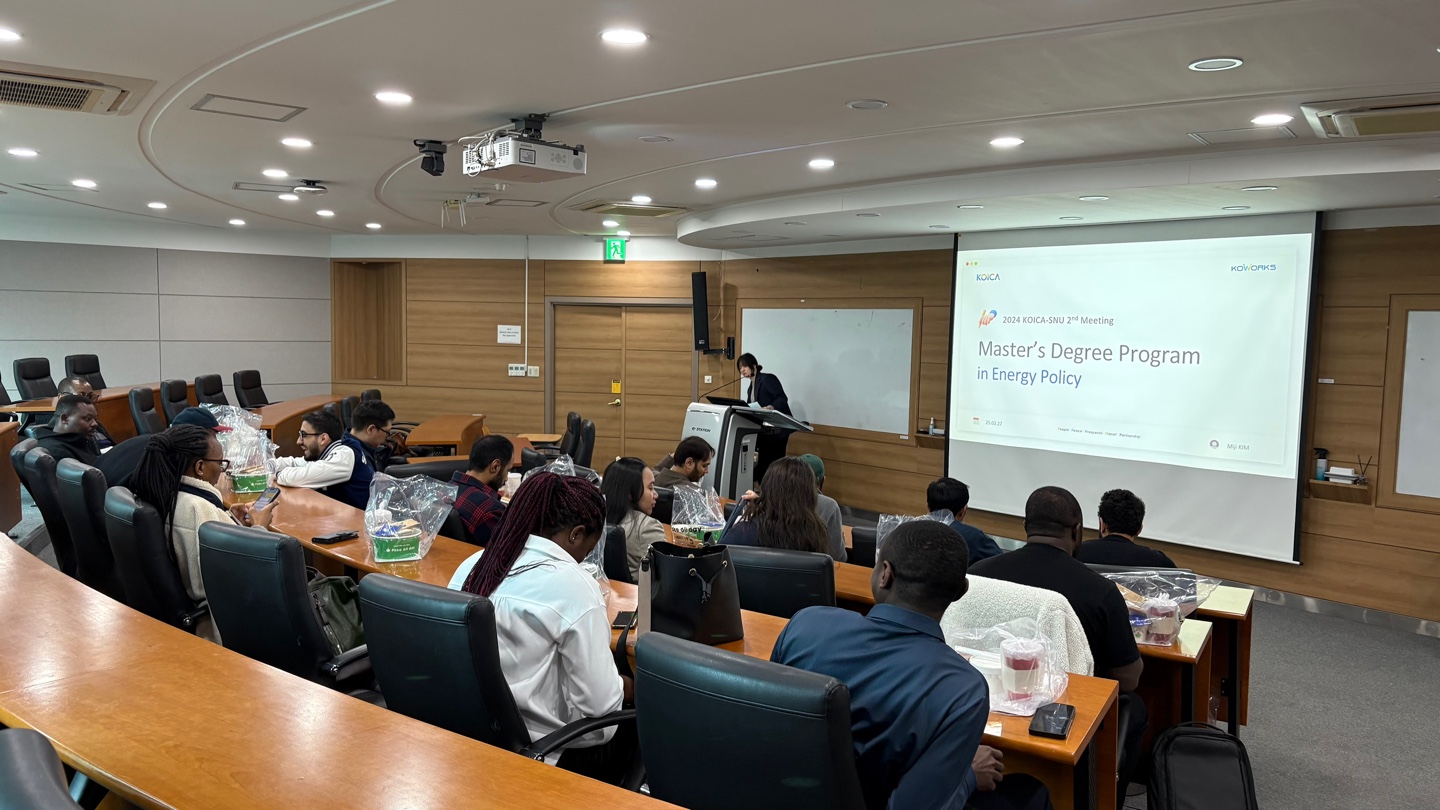
As the DCPP 17th batch approached the completion of their program, a KOICA Monitoring Session was held to review the participants’ academic progress and overall adaptation to life in Korea. During the session, students’ academic performance was carefully assessed, including their coursework, participation in lectures, and thesis preparation status. In addition, updates on students’ health conditions and temporary returns to their home countries were reviewed. The results of the mid-term survey conducted among KOICA scholars were also shared and discussed. The session further provided an opportunity to evaluate the trainees’ overall adjustment to life in Korea and to offer guidance on important considerations for successfully completing the program. Students were also encouraged to reflect on their experiences since arriving in Korea, sharing personal insights and discussing any questions related to the program through an interactive Q&A session. Following the monitoring session, the students participated in their Graduation Photoshoot at Pungsan Madang and within the GSIS building. Surrounded by the beautiful autumn scenery, they captured memorable moments, including formal portraits in graduation gowns in front of the official backdrop. We sincerely congratulate the DCPP 17th batch on successfully completing this meaningful year of academic and personal growth, and we wish them all the best in their future endeavors.
2025-11-05
Read More -
[2025.10.29_173rd Developing Countries‘ Roundtable]
Today, Hina Jamil and Stephano Masaki gave a presentation on their countries, Pakistan and Tanzania, introducing their historical backgrounds, cultural diversities, and policies for gender equality. Hina Jamil explained Pakistan's empowerment policies, related institutions, and iconic women in Pakistan. Stephano Masaki talked about Tanzania’s culture, such as food and major festivals, and the beautiful scenery. This was our second roundtable of this semester, starting with a lively Q&A session where students asked questions about Pakistan and Tanzania's history, culture, and current development. Thank you to everyone who joined us today, and we look forward to seeing you again at our next event!
2025-10-29
Read More -
 [2025.10.01_172nd Developing Countries‘ Roundtable]
On October 1st, Emmanuel gave a presentation on his country, Nigeria, introducing its historical background, economy, and cultural diversity. He explained Nigeria’s culture, such as clothing, major festivals, and the importance of natural resources and industries in the country’s economy. He also talked about the educational system and related institutions in Nigeria. This was the first roundtable of the semester, starting with a lively Q&A session where students asked questions about Nigeria’s history, culture, and current development. Thank you to everyone who joined us today, and we look forward to seeing you again at our next event!
2025-10-13
Read More -
[2025.09.15-17] 18th Batch_Campus Tour
On september 15 to 17, students from the 18th batch had the opportunity to explore the beautiful Seoul National University campus with program assistants, who helped them adapt to their new academic environment and strengthen their bonds with their peers. The tour was conducted in small groups to encourage interaction and relationship-building between students and staff. Each group visited important campus facilities, including the GSIS building, the Kwanjeong Library, the Student Union Building, and the Student Health Center. They were also introduced to practical on-campus services such as the post office, bank, pharmacy, and bookstore. The most special moment of the tour came when the students received their ID cards, making them feel like true members of the Seoul National University community! Throughout the tour, the students laughed, formed friendships, and created memories of the autumn campus. The tour concluded with a group lunch, where students bonded over Korean food and shared questions and experiences of campus life, expressing their excitement for the upcoming semester. We look forward to seeing the remarkable things you will achieve at Seoul National University!
2025-10-13
Read More -
 [2025.09.01_18th Entrance Ceremony]
On September 1st, 2025, we proudly hosted the entrance ceremony, orientation, and educational sessions for the newest cohort of the DCPP program. The day began with the official Entrance Ceremony at the GSIS GL Room, where our new scholars were warmly welcomed by GSIS Dean Sung-ho Sheen, Professor Chong-Sup Kim, and Professor Semee Yoon. Each student was introduced by name, nationality, and professional background, and received their scholarship certificate in front of fellow scholars and faculty members. Following the ceremony, an Orientation Session provided an overview of the program curriculum, graduation requirements, and campus facilities. Students also had the opportunity to ask questions and receive guidance on both academic life and daily living in Korea. The event concluded with two important Education Sessions designed to prepare students for a safe and inclusive experience in Korea: The Sexual Harassment Prevention session, led by Senior Officer Yeon-joo Park, focused on key concepts such as gender equality, prejudice, and privilege. The Crime Prevention Education session, delivered by Senior Officer Chang-seok Gwak, covered real-life risks and practical safety tips. We are excited to welcome this new group of scholars and look forward to their incredible journey ahead at SNU!
2025-09-17
Read More -
[2025.08.05–07_Jeju Field Trip]
From August 5 to 7, 2025, students from the SNU-KOICA Master’s Program in Energy Policy (DCPP) embarked on a three-day industrial field trip to Jeju Island. This experiential learning opportunity allowed participants to deepen their understanding of Korea’s energy transition and climate initiatives through site visits, expert lectures, and interactive discussions. The program began with a visit to the CFI Future Hall at Jeju Energy Corporation, where students explored the island’s Carbon-Free Island (CFI) policy. They studied key technologies driving the policy, including green hydrogen production through Korea’s largest water electrolysis system, P2Heat technology that utilizes surplus renewable energy, and the structural and functional design of modern wind turbines. In the afternoon, participants visited the Jeju Regional Meteorological Office to examine local weather forecasting systems and understand the regional impacts of climate change on Jeju Island. Over the next two days, students attended a workshop hosted by UNITAR Jeju International Training Center titled “Clean Energy Transitions and Practical Policy for Future Global Policy Leaders.” The sessions covered a wide range of topics, including Korea’s approach to energy-related Official Development Assistance (ODA), climate diplomacy, and strategies for localizing the RE100 initiative. Students analyzed how policy tools for sustainable energy transitions can be adapted to different national contexts and implementation challenges. The field trip concluded with an on-site visit to the Tamra Offshore Wind Farm, Korea’s first commercial offshore wind energy project. Here, students observed turbine installation processes, grid connection infrastructure, and marine safety management practices. They also engaged in discussions on the environmental impacts of offshore wind projects, particularly on marine ecosystems, and explored strategies for transparent communication and benefit-sharing with local communities. This hands-on field experience offered students valuable insight into Korea’s leadership in renewable energy development and climate action. It served as a platform to connect theoretical learning with real-world applications, fostering a deeper understanding of practical energy policy and innovation.
2025-08-13
Read More